


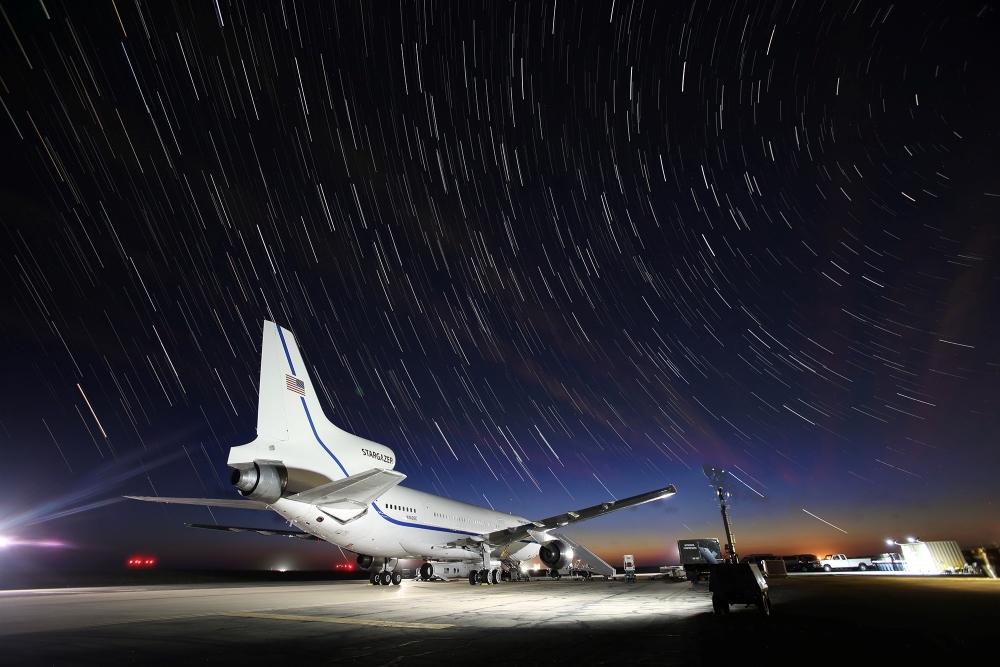
Northrop Grumman’s Pegasus rocket is set to power a time-critical mission aimed at extending the life of NASA’s Neil Gehrels Swift Observatory, demonstrating the platform’s rapid-response launch capability and operational flexibility.
Scheduled for launch this June, the mission will see Pegasus carry Katalyst Space’s LINK spacecraft, which will intercept the Swift Observatory in a decaying orbit and boost it to a higher altitude. The operation is designed to prevent re-entry and extend the lifespan of the scientific platform, which has been operational since 2004.
Pegasus, known for its air-launched architecture, was selected for the mission due to its ability to meet strict orbital, timeline, and budget requirements. Released midair from an L-1011 carrier aircraft, the system offers unique responsiveness and global launch flexibility, making it well-suited for urgent missions.
“Pegasus has been instrumental in launching science satellites over the years, and doing this as a rapid response mission from Kwajalein Atoll truly highlights what Pegasus can do: quick assembly, testing, and global repositioning,” said Steve Hollo, Chief Engineer of Pegasus. “The latest mission features a complete avionics upgrade to modernize the rocket while carrying forward decades of technological heritage. Plus, not being tied to a single launch site gives us incredible flexibility and responsiveness that few other vehicles can match.”
With more than 45 launches since 1990, Pegasus has played a key role in deploying scientific and exploration payloads. Its ability to be assembled and launched from multiple global locations underscores its adaptability, particularly for missions requiring rapid deployment.
The Swift Observatory, originally designed for a two-year mission, has been operational for over two decades, contributing significantly to the study of gamma-ray bursts and high-energy astrophysics.
“Swift was designed to observe gamma ray bursts that are so fleeting no previous telescope could catch them in the act. Swift detects gamma ray bursts over a large part of the sky, and then rapidly re-orients to point powerful X-ray and ultraviolet telescopes to observe the fading afterglow of the explosions,” stated John Jordan, Swift’s original Chief Engineer.
“Its longevity isn’t luck. It’s the result of solid engineering, in-house-built redundant avionics and continuous learning from extensive ground testing and real-time operations,” he added.
The Pegasus-led mission reflects Northrop Grumman’s continued focus on responsive space capabilities, combining decades of engineering expertise with modern upgrades to support evolving mission requirements. The effort also highlights the growing importance of on-orbit servicing and rapid deployment solutions in sustaining critical space-based assets.