

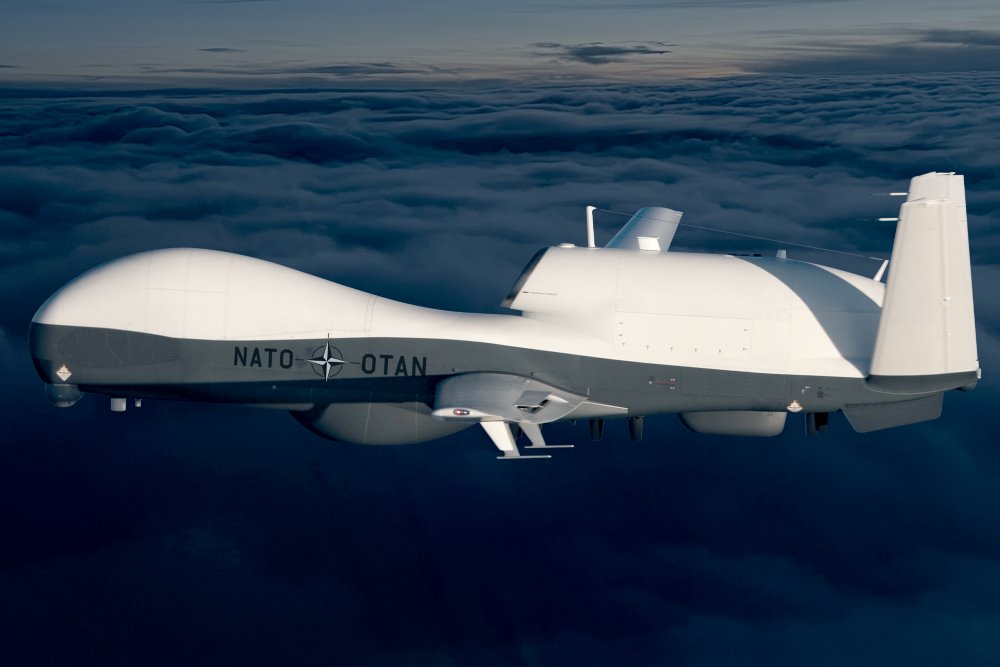
NATO has signed a Letter of Intent (LOI) to expand its Intelligence, Surveillance, and Reconnaissance (ISR) Force by pursuing the acquisition of Northrop Grumman’s MQ-4C Triton aircraft, strengthening allied maritime security and situational awareness.
The LOI was signed by four nations at the NATO Summit Defense Industry Forum. Working with NATO, the U.S. Navy and trans-Atlantic industry partners, Northrop Grumman would build and deliver the aircraft, while key European partners would provide ground station components and supporting data processing infrastructure.
NATO currently operates Northrop Grumman’s RQ-4D Phoenix from Sigonella, Italy, providing ISR data for joint decision-making. The MQ-4C Triton will complement the existing fleet by expanding NATO’s maritime surveillance capabilities and increasing coverage across the alliance’s northern, eastern and southern flanks, while offering operational, maintenance and training synergies with the Phoenix fleet.
Jane Bishop, vice president and general manager, global surveillance division, Northrop Grumman: “Our collaboration with NATO and the U.S. Navy strengthens the Alliance’s ground and maritime surveillance capabilities. Like Phoenix, Triton conducts ISR at higher altitude and with longer endurance than medium-altitude systems, and is poised to provide NATO new levels of capability and operational flexibility to monitor and protect maritime interests from the Mediterranean to the High North.”
Built for the U.S. Navy and the Royal Australian Air Force, the multi-intelligence MQ-4C Triton supports maritime patrol, signals intelligence and search and rescue missions. It builds on Northrop Grumman’s high-altitude, long-endurance (HALE) expertise to deliver persistent maritime surveillance.