


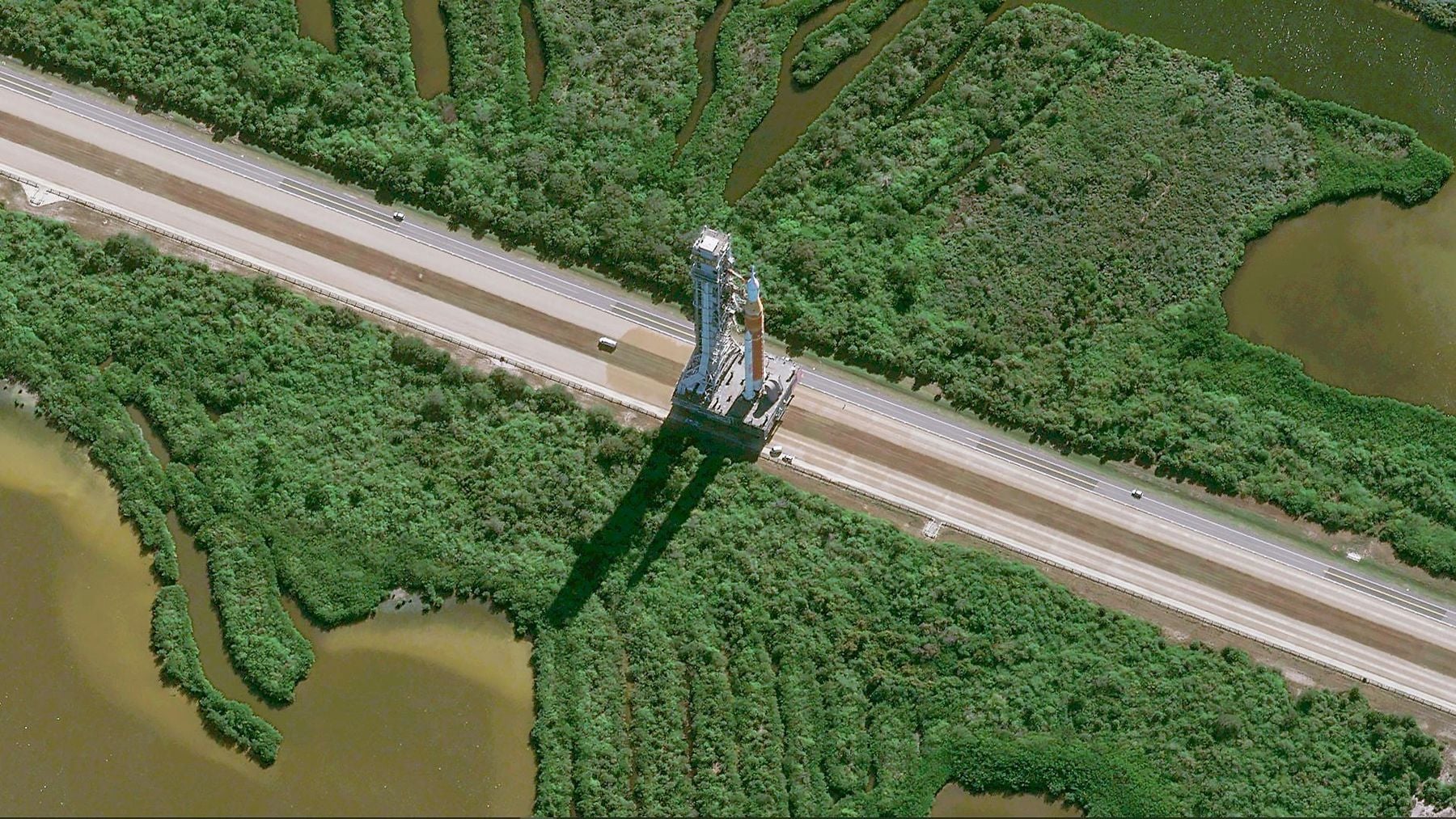
As the world prepares for the launch of Artemis II, the first crewed mission to the Moon in over 50 years, the Orion European Service Module (ESM-2) is fully integrated, fuelled, and “go” for flight. The ESM is built by Airbus on behalf of the European Space Agency (ESA). Functioning as the powerhouse of NASA’s Orion spacecraft, the ESM-2 will provide propulsion, power, thermal control and the vital air and water needed for the four astronauts to survive in Space.
The mission, scheduled to launch from Kennedy Space Center, will send NASA astronauts Reid Wiseman, Victor Glover, Christina Koch, and Canadian Space Agency (CSA) astronaut Jeremy Hansen on a 10-day journey around the Moon. Unlike the uncrewed Artemis I test, this mission places human lives directly in the hands of European engineering.
“The transition from Artemis I to Artemis II is the shift from a test vehicle to a living space,” said Marc Steckling, Head of Earth Observation, Science and Space Exploration at Airbus. “When Reid Wiseman and his crew throttle up the ESM’s engines to leave Earth orbit, they are also trusting the work of hundreds of engineers across ten European nations to take them to the Moon and bring them home safely.”
Airbus is already looking beyond this mission. ESM-3 in 2027 will test rendezvous and docking capabilities between Orion and commercial spacecraft needed to land astronauts on the Moon. And in 2028 ESM-4, destined to support the lunar landing of Artemis IV, is currently undergoing final integration at Kennedy Space Center (KSC). The ESM-4 was delivered to KSC in late 2025, while ESM-5 and ESM-6 are currently in production in Airbus’ Bremen cleanrooms with shipments slated for 2027 and 2028, thus ensuring a steady cadence for NASA’s long-term lunar presence.
The ESM is a cylinder approximately four metres high and wide. It has a distinctive drive system comprising one main engine (a repurposed Space Shuttle OMS engine), eight auxiliary engines, and 24 smaller thrusters for attitude control. It is built by Airbus as the prime contractor for the European Space Agency (ESA), with final assembly in Bremen, Germany.