
Trace Stevenson, President of Autonomous Systems, AeroVironment Inc.
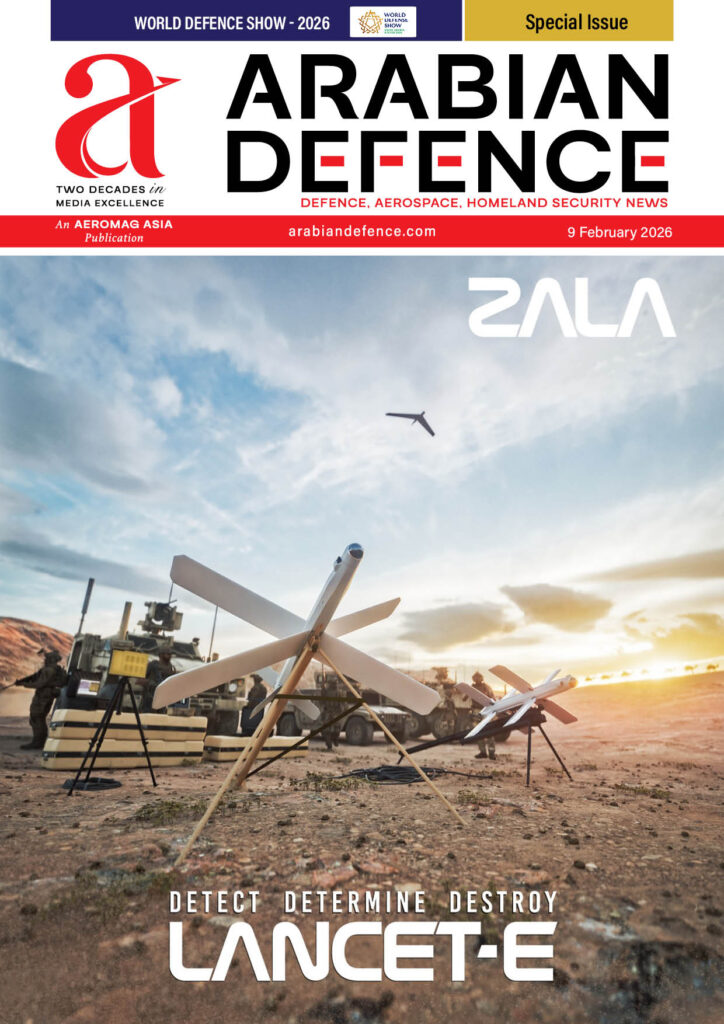
As autonomous systems, AI-driven decision-making, and counter-UAS technologies reshape modern warfare, AeroVironment is positioning itself at the forefront of this transformation. In an interview with Arabian Defence, Trace Stevenson, President of Autonomous Systems, AeroVironment Inc. discusses how the company is translating the shift toward distributed and autonomous warfare into scalable, field-proven capabilities. He outlines AeroVironment’s evolving portfolio following its acquisition of BlueHalo, the role of software-defined ecosystems like AV_Halo, and the company’s vision for multi-domain operations, directed energy, and global expansion, particularly across emerging defence markets.
Defence strategies are shifting toward more distributed and autonomous concepts of warfare. How is AeroVironment translating this vision into scalable, real-world capabilities for today’s and tomorrow’s battlefields?
Thank you, Arabian Defense, for the opportunity to engage with your audience.
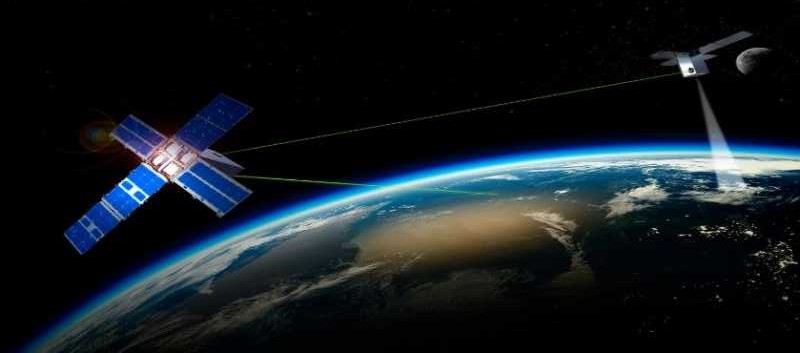
For those who may be unfamiliar with our evolution, AeroVironment (AV) completed a significant acquisition of BlueHalo in 2025. While our scale and scope expanded, our mission remained constant: to deliver integrated defense technology solutions that drive mission success and create decisive advantage across every domain of modern warfare. The acquisition strengthened our portfolio in unmanned autonomous systems, layered counter-UAS, and space communications, bringing together AI-forward, distributed, and autonomous capabilities that are foundational to how we operate.
Translating this vision into real-world capability comes down to how we work. At AV, we build shoulder-to-shoulder with our customers, developing systems alongside operators and mission partners rather than in isolation. That close operational collaboration ensures our solutions are shaped by real missions, real constraints, and real threats. We focus relentlessly on what performs in the field—scaling what works, refining what doesn’t, and continuously evolving our systems to stay ahead of tomorrow’s battlefields.
Could you outline AeroVironment’s flagship products and the core technological expertise that differentiates AV in the global defence market?
Broadly, our portfolio is organized around three core capability areas that reflect both where the fight is going and where AV has built deep, differentiated expertise.
Autonomous Unmanned Systems.
Platforms such as JUMP® 20-X and Puma™ span Group 3 and small UAS missions, delivering advanced ISR with modular, adaptable payloads that can be rapidly tailored to diverse operational needs. Our Switchblade® 300 and 600 loitering munition systems are combat-proven at scale, with thousands deployed and hundreds of successful engagements directly informing their continued evolution. That operational feedback loop is a key differentiator—these systems improve because they are used.
Layered counter-UAS defense. The LOCUST™ Laser Weapon System provides a directed-energy C-UAS capability that is now operationally deployed and integrated on mobile platforms for force protection. Complementing this is Titan® RF C-UAS, our flagship autonomous detect-and-defeat solution. Titan is designed for rapid deployment across complex environments—from dense urban terrain to remote rural areas—and can be configured for mobile, dismounted, or fixed-site operations.
Mission services. Our teams are often embedded directly with customers, developing tactical solutions alongside operators to stay ahead of evolving global threats. This work delivers actionable intelligence at the mission’s edge and is underpinned by industry-leading open-architecture technologies, mission planning tools, and capability development. Together, these three areas form an integrated ecosystem that allows AV to move quickly from technology to operational effect.
How does AV_Halo serve as the unifying backbone for AeroVironment’s multi-domain, autonomous and counter-UAS capabilities?
AV_Halo™ is the unifying backbone of AV’s multi-domain, autonomous, and counter-UAS capabilities. It is a hardware-agnostic, AI-powered software ecosystem that brings multi-domain command and control, AI-enabled intelligence, synthetic training, and autonomous targeting into a single, open-standards platform. The result is a common digital foundation that allows warfighters to detect, decide, and deliver effects faster, while reducing training burden and operational friction.
Designed with a modular architecture, AV_Halo integrates seamlessly with both legacy and next-generation systems across the portfolio—from LOCUST laser weapons to Titan C-UAS—enabling synchronized autonomy and coordinated effects across domains. Within the ecosystem, modules such as PINPOINT provide precise target acquisition and tracking for directed-energy and RF payloads, while COMMAND fuses multi-sensor data into a unified operating picture supporting UAS, C-UAS, and beyond-visual-line-of-sight missions. Together, AV_Halo turns a diverse set of platforms into a coherent, scalable operational system.
How do the Switchblade and Blackwing systems demonstrate the evolving role of autonomous and loitering munitions in enhancing precision, survivability, and mission success?
Switchblade and Blackwing™ highlight the transformative impact of autonomous, loitering munitions on modern warfare. These systems close the gap between observation and action, delivering real-time intelligence and precision firepower with minimal collateral damage.
- Switchblade 300/400/600: Offer wave-off/recommit capability, extended endurance, and multi-domain launch options (ground, air, maritime). Their modular payloads and AI-driven targeting enable adaptive, overwhelming precision, even against hardened or moving targets.
- Blackwing: Provides rapid-response ISR and cross-domain relay, launched from submarines or surface vessels, extending situational awareness in contested environments.
These systems are not just weapons; they are force multipliers in both symmetric and evolving asymmetric warfare, enhancing survivability by enabling distributed, networked operations and reducing sensor-to-shooter timelines.
AeroVironment recently delivered JLTV-mounted mobile C-UAS Laser Weapon Systems to the U.S. Army under the AMP-HEL program. What does this milestone signify for the operational maturity of directed-energy systems within Army force protection?
The delivery of JLTV-mounted LOCUST systems under the AMP-HEL program represents a significant milestone in the operational maturity of directed-energy for Army force protection. These 20kW-class laser systems, equipped with upgraded beam directors, have demonstrated high operational availability and real-world effectiveness against UAS threats. Their platform-agnostic design and seamless integration with Army command-and-control architectures highlight both their scalability and readiness for wider fielding.
More broadly, this milestone confirms that directed energy is deployable, reliable, and operationally relevant today. Mobile, vehicle-based laser systems offer the Army a cost-effective, rapid-response option for countering evolving aerial threats, and reflect a deliberate shift toward integrating directed-energy weapons into maneuver formations as well as fixed-site defense.
How does AV approach R&D to stay ahead of industry trends and effectively meet the evolving demands of modern conflicts?
AV approaches R&D with a clear focus on agility, operational relevance, and continuous evolution. We embed warfighter feedback directly into our development process and design with multi-generational roadmaps in mind, allowing systems to adapt as threats, missions, and operating environments change. Significant investment in autonomy, AI, edge computing, and advanced materials is paired with a rapid design-to-deployment cycle that moves capability from concept to the field quickly.
Equally important is our commitment to modular, open-architecture solutions such as AV_Halo, which allow capabilities to be upgraded, integrated, and reconfigured without starting from scratch. R&D at AV is not innovation for its own sake—it is about delivering scalable, interoperable, and mission-ready systems that remain relevant over time and give warfighters a decisive edge in today’s conflicts and those still emerging.
Looking ahead, what are AeroVironment’s key priorities for growth, and which markets or capability areas do you see driving the company’s next phase of expansion?
AV doesn’t just respond to the future of defense, we define it. By combining battlefield-proven innovation, AI-powered autonomy, and a relentless focus on warfighter needs, we are shaping the next era of multi-domain operations.
AeroVironment’s growth plans are anchored in three strategic pillars:
- Expanding Multi-Domain Dominance: Deepening our leadership in autonomous systems, directed energy, and counter-UAS, with a focus on AI-driven decision superiority and synchronized autonomy across all domains.
- Global Market Penetration: Leveraging our battle-proven reputation to scale international sales. For example, AV and Thaka Industrial Company have signed a Memorandum of Intent (MoI) to expand collaboration on uncrewed systems in support of the Kingdom of Saudi Arabia. This reflects our alignment with Vision 2030 and AV’s role in delivering advanced, field-proven systems at scale.
- Next-Gen Capabilities: Advancing space-based platforms, electronic warfare, and cyber solutions, while continuing to invest in manufacturing scale and supply chain resilience to meet accelerating global demand.
Our recent $4.1B acquisition of BlueHalo has positioned us as a true all-domain defense technology leader, ready to deliver end-to-end solutions for the most critical national security challenges. We look forward to serving the markets Arabian Defense addresses, in 2006 and beyond.